
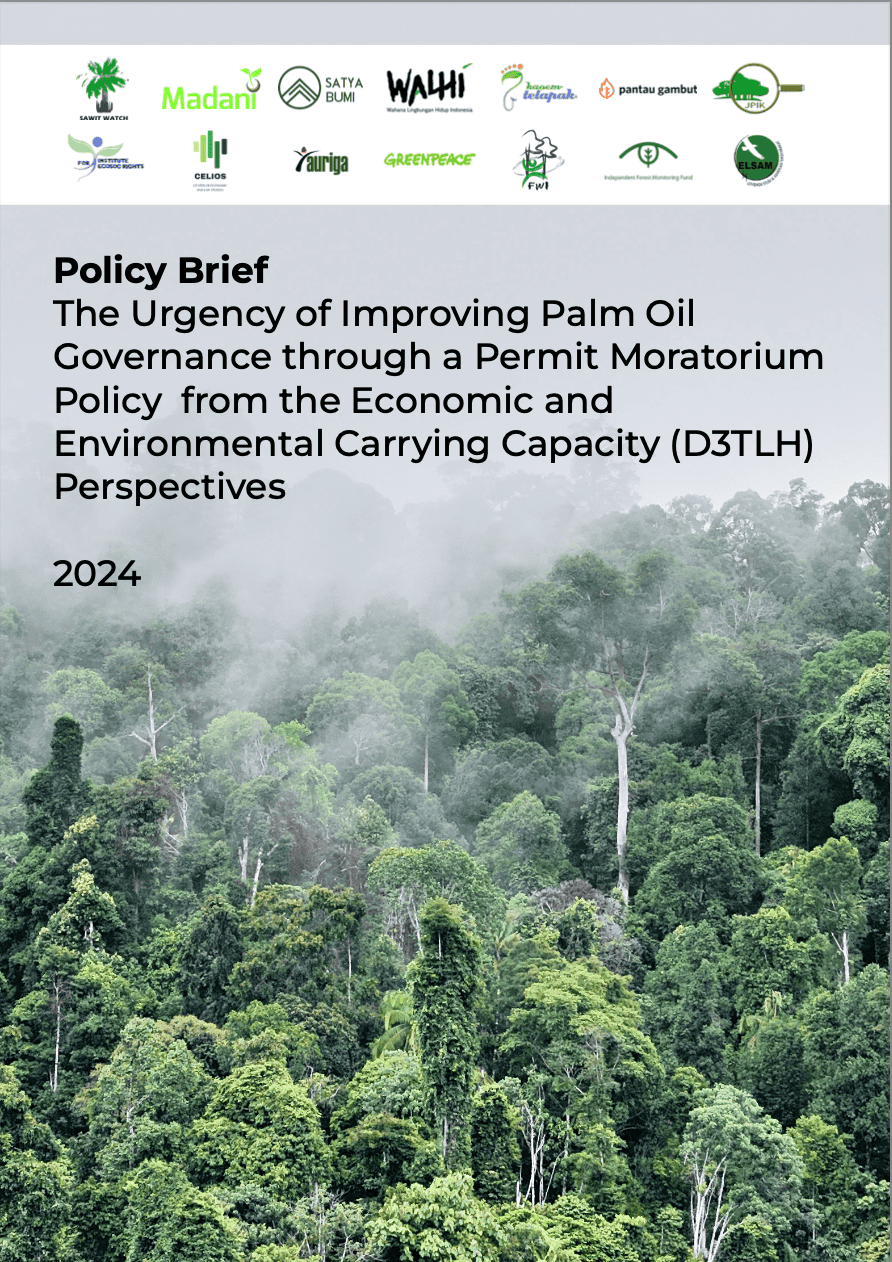
Indonesia’s palm oil industry faces economic, social, and environmental challenges, including deforestation and global regulations such as the EUDR. Economic growth in palm oil-producing regions does not align with land expansion, while compliance with legality and sustainability certifications remains low. Additionally, the government loses potential tax revenue due to corrupt licensing practices, and biodiesel plans (B35-B50) risk further deforestation.
Presidential Instruction No. 8/2018, which implemented a moratorium on palm oil permits, aimed to improve governance and productivity without land expansion. However, the policy was not extended after 2021. Economic studies show that a moratorium combined with replanting yields better outcomes than expansion, boosting GDP, tax revenue, and export competitiveness. This approach is projected to generate economic output of IDR 30.5 trillion and create 827,000 jobs by 2045, compared to the negative impact of expansion.
Environmental capacity analysis identifies the optimal palm oil land area in Indonesia at 18.15 million hectares. Many existing plantations are in unsuitable areas, with Sumatra and Kalimantan exceeding ecological thresholds. Therefore, civil society advocates for policies halting new permits, consolidating data, increasing productivity, and fostering sustainable governance to ensure economic sustainability while reducing carbon emission.