jpik

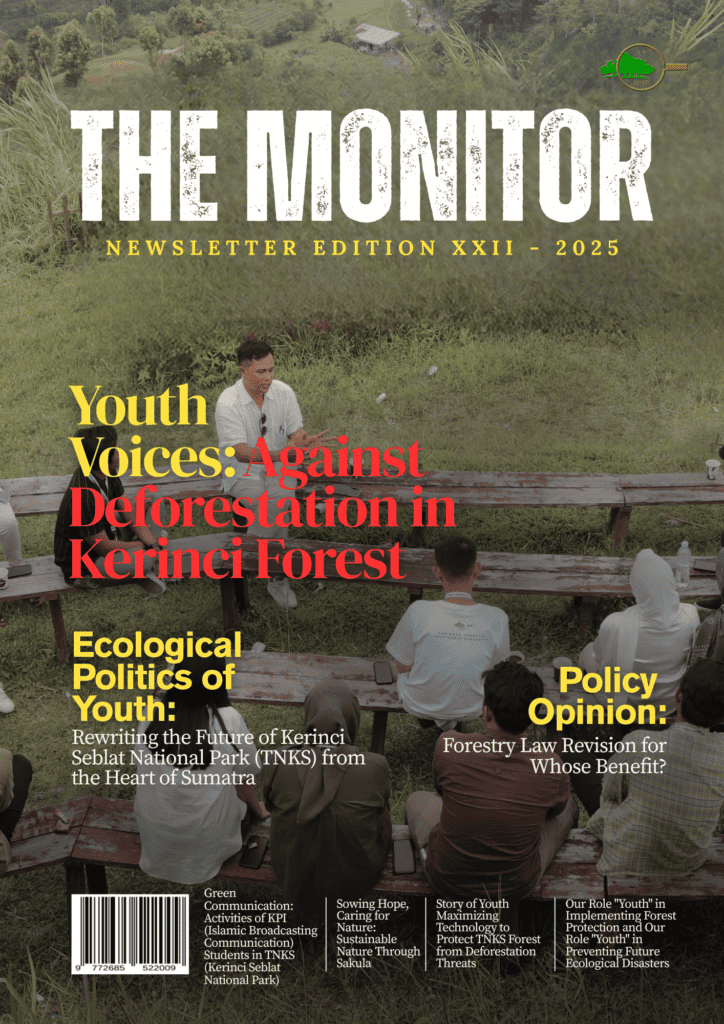
The Monitor Newsletter Edition 24

The floods and landslides that transpired in various regions of Sumatra during late 2025 cannot be viewed merely as natural occurrences. Numerous field observations reveal a significant connection between these disasters and persistent forest degradation, which includes illegal logging, insufficient oversight, and flawed licensing practices. In many instances, indicators of degradation emerged well in advance […]

The Monitor Newsletter Edition 24 Read More »
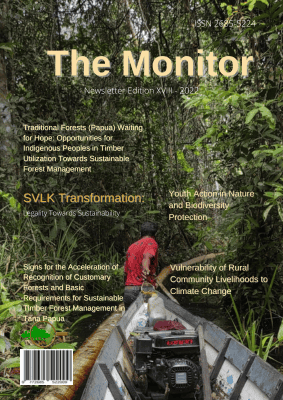
The Monitor Newsletter Edition 23

Indonesia’s forest management still faces serious challenges, particularly in protecting species of high conservation value from exploitation. Illegal logging no longer occurs sporadically; it is now part of a well-organized, sustainable supply chain that exploits regulatory loopholes and weak supervision. The Monitor, a quarterly newsletter published by the Independent Forestry Monitoring Network (JPIK), serves as

The Monitor Newsletter Edition 23 Read More »

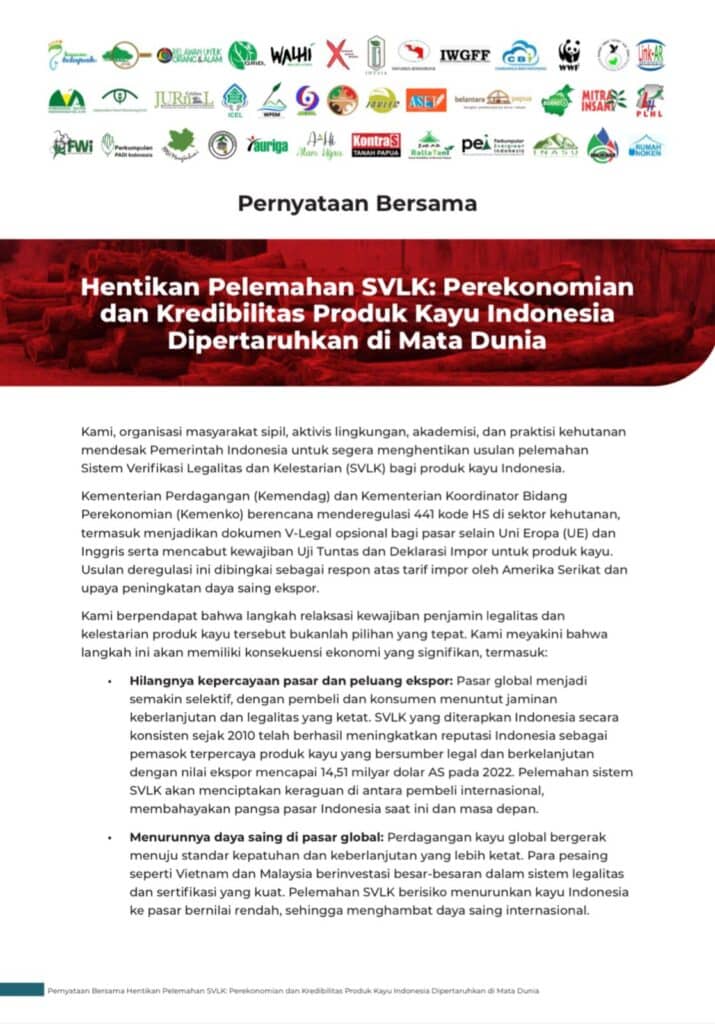
SVLK Under Siege: Indonesia’s Timber Credibility and Economy at Stake

We, civil society organizations, environmental activists, academics, and forestry practitioners have been informed that in response to import tariffs by the United States and to improve the export competitiveness of Indonesian wood furniture and handicraft products, the Ministry of Trade (MoT) and the Coordinating Ministry for Economic Affairs (Coordinating Ministry) plan to deregulate 441 HS

SVLK Under Siege: Indonesia’s Timber Credibility and Economy at Stake Read More »

Jambi Forest Guardian’s Contribution to the International Stage in Forest Conservation

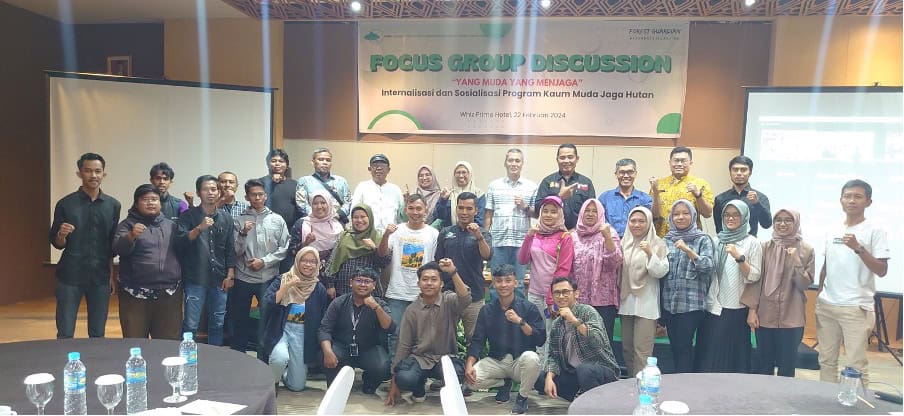
Jambi Forest Guardian’s Contribution to the International Stage in Forest Conservation AUTHOR: Suspa Yusmita (FOREST GUARDIAN JAMBI) As part of Forest Guardian Jambi, Boby shares his community’s experience in monitoring forests in Kerinci Seblat National Park (TNKS). TNKS is one of the largest protected forests in Southeast Asia that faces various threats such as illegal

Jambi Forest Guardian’s Contribution to the International Stage in Forest Conservation Read More »

The Urgency of Improving Palm Oil Governance through a Policy on Terminating the Granting of Permits from an Economic Perspective and Environmental Carrying Capacity (D3TLH)

Indonesia’s palm oil industry faces economic, social, and environmental challenges, including deforestation and global regulations such as the EUDR. Economic growth in palm oil-producing regions does not align with land expansion, while compliance with legality and sustainability certifications remains low. Additionally, the government loses potential tax revenue due to corrupt licensing practices, and biodiesel plans

The Urgency of Improving Palm Oil Governance through a Policy on Terminating the Granting of Permits from an Economic Perspective and Environmental Carrying Capacity (D3TLH) Read More »

Newsletter The Monitor 21th Edition

The 21st edition of The Monitor explores the theme “Mining VS Nature; The Battle between Progress and Sustainability,” delving into the dilemma between economic progress through mining and environmental sustainability. It highlights the issuance of Mining Business Permits (IUP) to Religious Community Organizations (Ormas) under Government Regulation Number 25 of 2024, which has sparked both

Newsletter The Monitor 21th Edition Read More »

Considerations for benchmarking Indonesia’s EUDR readiness – What the palm oil example reveals

The European Union Deforestation-free Regulation (EUDR) brings opportunities for Indonesia to fight deforestation. However, the implementation of EUDR in Indonesia still faces many challenges. This position paper provides suggestions for improving the EUDR Benchmarking methodology to make it more effective in protecting Indonesia’s forests. Civil society report examines Indonesia’s palm oil sector and provides suggestions

Considerations for benchmarking Indonesia’s EUDR readiness – What the palm oil example reveals Read More »

Have information on forestry violations?

Report your findings to be verified and encouraged to become part of law enforcement processes and policy advocacy.

Scroll to Top